What to Expect From Your First Real Estate Listing as a New Agent
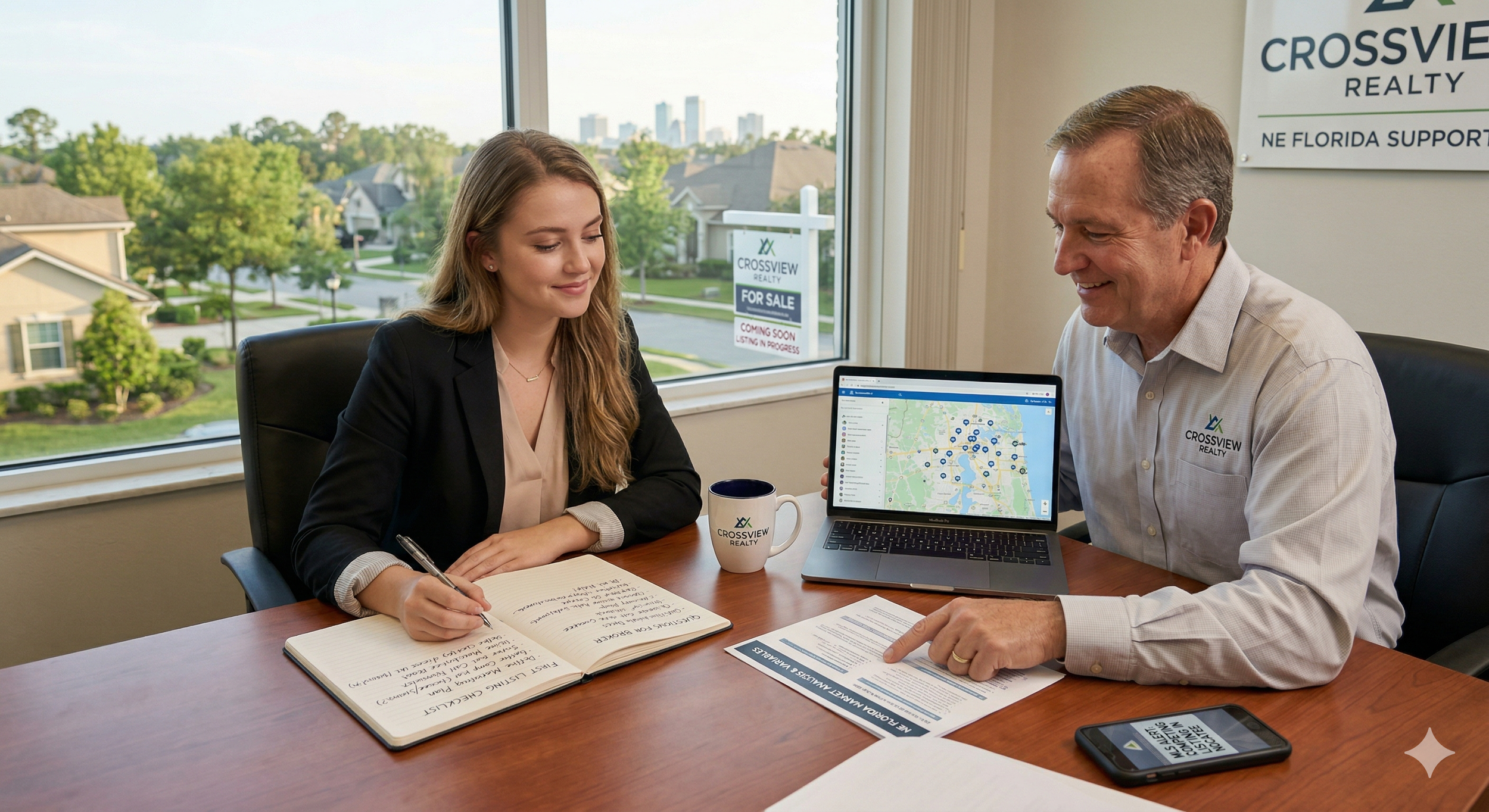
If you're a new real estate agent about to take your first listing, what should you actually be prepared for?
The honest answer is this: you won't be fully prepared — and that's not a failure, that's just reality. No amount of pre-licensing coursework fully readies you for the real thing. What matters most is that you have support behind you, a plan going in, and the awareness to know what questions to ask.
Here's what your first listing is going to teach you — before it happens.
There Is No One-Size-Fits-All Listing
The first thing to understand is that every listing is its own situation. The variables are almost endless — and they all impact how you handle it.
Is it a primary residence or an investment property? Is the seller on a tight timeline or do they have flexibility? Is it a seller's market or a buyer's market right now? Are they trying to maximize price or close quickly? Is the property near a military base, in a growing NE Florida suburb like Nocatee or St. Johns, or in a neighborhood with limited comps?
Each one of those factors changes your approach. New agents who struggle with their first listing are often looking for a formula that doesn't exist. The better mindset is to gather the facts first, then build your strategy around this specific seller, this specific property, and this specific market moment.
Build Your Marketing Plan Before You List
One of the most important things you can do before the sign goes in the yard is have a clear, written marketing plan — not a vague idea, an actual plan.
What does your social media strategy look like for this property? What platforms, what content, what frequency? Is there a digital ad component? Are you doing any print, direct mail, or e-blasts? What does your MLS presentation look like — professional photos, strong description, accurate details?
And here's a layer most new agents miss: think about who the most likely buyer is for this property, and make sure your marketing speaks to them. A home near a Jacksonville military installation might appeal strongly to active duty families. A property close to the water might attract vacation rental investors. A three-bedroom in a top St. Johns County community might be a move-up buyer's first target.
You're marketing to everyone — you always want maximum exposure. But keeping an eye on your likely buyer helps you sharpen your messaging so it actually connects with the people most ready to write an offer.
Communicate With Your Sellers Every Single Week
This is where a lot of new agents go quiet when they shouldn't. They put the listing live, set up the lockbox, and then wait for something to happen before they reach out again.
Don't do that.
Your sellers need to hear from you every week — even when there's nothing to report. A quick check-in that says "no new showings this week, here's where we stand on comparable listings" is infinitely better than silence. Silence makes sellers nervous. Nervous sellers make your job harder.
At your first meeting, ask them directly: how do you prefer to communicate? Text, email, phone call? Set that expectation early and stick to it. It's one of the simplest things you can do to build trust — and one of the most overlooked.
If you're still getting your bearings on what that first client relationship should look like, our post on your first 90 days as a real estate agent covers the habits that make the biggest difference early on.
Set Up a Competing Listings Alert in Your MLS
Here's a practical move most new agents don't think of: run a search in your MLS for homes similar to your listing — same area, comparable bedrooms, bathrooms, and price range — and have it sent directly to you automatically.
That way, when a competing home has a price reduction, goes under contract, or holds an open house, you know before your seller does. And you're the one bringing them the update.
That's a powerful position to be in. It helps you have data-driven conversations about market adjustments if the listing isn't moving, and it shows your seller that you're paying attention — not just waiting around. In a market like Jacksonville or St. Augustine where inventory can shift quickly, staying ahead of what's happening around your listing is part of doing the job well.
You Will Have Questions. That's Why Support Matters.
No matter how prepared you are, your first listing will generate questions you don't know the answers to. Disclosure situations, contract language, offer negotiations, inspection outcomes — things come up that you haven't encountered before.
That's not a sign you're not ready. It's just real estate.
What matters is that you have someone to call. A broker or mentor who picks up the phone, gives you a straight answer, and helps you work through it in real time. As we've written about in what real broker support actually looks like, that access isn't a luxury — it's a necessity, especially early in your career.
How CrossView Realty Approaches This
At CrossView Realty, new agents in Jacksonville and across Northeast Florida don't take their first listings alone. We're involved — available for questions, willing to walk through situations in real time, and committed to making sure you have the tools and training to serve your sellers well. Learn more about how we support agents from day one at joincrossviewrealty.com or call 904-503-0672.
Your first listing won't be perfect. But with the right preparation, the right marketing plan, consistent communication, and the right support behind you — it can absolutely be a success. Take it one step at a time, and don't be afraid to ask for help along the way.
Frequently Asked Questions
Q: What should a new real estate agent do before taking their first listing? Start with a clear marketing plan — know how you'll promote the property online, on social media, and in print before the sign goes in the yard. Then understand the seller's goals, timeline, and communication preferences. The more clarity you have upfront, the smoother the process will be.
Q: How often should I communicate with my seller during a listing? At minimum, once a week — even when there's no news. Regular check-ins keep your seller calm, informed, and trusting. Ask them upfront how they prefer to communicate and stick to that preference throughout the listing.
Q: What's the biggest mistake new agents make on their first listing? Going quiet after the listing goes live. Many new agents assume they only need to reach out when something happens. But sellers feel the silence — and it erodes trust. Consistent, proactive communication is one of the most important things you can do.
Q: How do I know what kind of buyer to market my listing to? Look at the property's location, features, and price point, then ask yourself who is most likely to buy it. A home near a military base in Jacksonville might attract military families. A property in a master-planned community like Nocatee might appeal to families or move-up buyers. Tailor your messaging without narrowing your overall exposure.
Q: What if I get questions during my first listing that I don't know how to answer? That's normal — and expected. The key is having a broker or mentor you can reach quickly. Choose your brokerage with that in mind. Real support isn't just onboarding — it's having access to someone who can help you work through live situations when they come up.