What Real Broker Support Actually Looks Like (And Why It Matters More Than You Think)
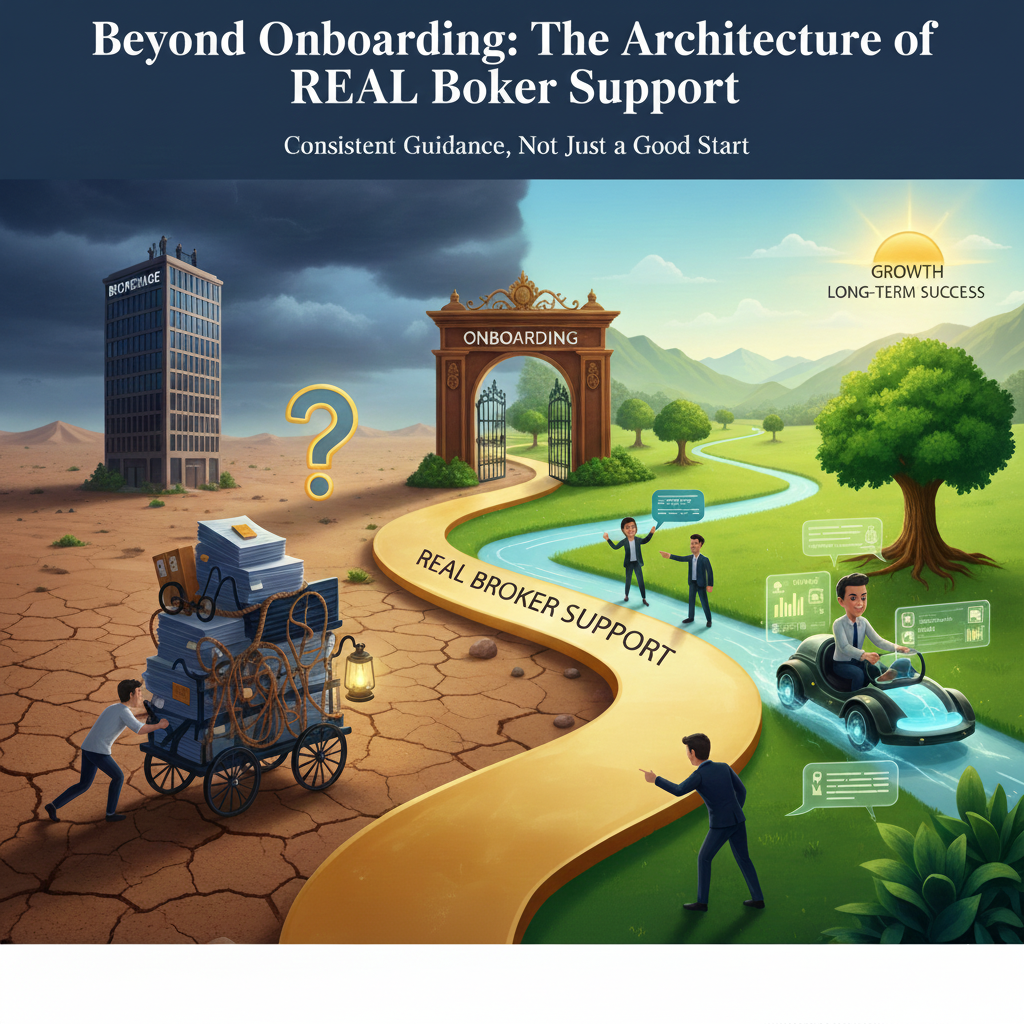
What does real broker support actually look like in today’s real estate market—and how do you know if you’re getting it?
This is one of the most important questions an agent can ask, and it goes far beyond onboarding, commission splits, or flashy promises.
Because at the end of the day, the level of broker support you have directly impacts:
Your confidence
Your compliance
Your growth
Your income
And your long-term sustainability
Yet many agents don’t realize what they’re missing until they’ve already outgrown their environment—or found themselves stuck without guidance when it matters most.
This pillar guide pulls together the core elements of strong, ongoing broker support and helps you evaluate whether your current setup is actually serving you.
Broker Support Isn’t Just About Onboarding
A strong onboarding process is important. But onboarding is temporary.
Real broker support is what happens after the paperwork is signed, the systems are introduced, and the excitement wears off.
Ongoing support means:
You’re not left to figure things out alone
You have access to leadership beyond the first 30 days
Guidance evolves as your business evolves
If support peaks during onboarding and disappears afterward, that’s not a support system—it’s a handoff.
Accessibility Matters More Than Agents Realize
One of the most common warning signs agents experience is feeling like their broker is simply too busy for them.
Strong broker support includes:
Timely responses
Approachability
Willingness to answer questions—without judgment
Clear backup coverage when a broker is unavailable
When agents hesitate to ask questions, they don’t stop having questions—they just start guessing. And that’s where mistakes happen.
Why Broker Availability Is a Risk Issue, Not Just a Convenience
In Florida, your broker isn’t just a mentor or manager. They are legally responsible for the agents under their license.
That means:
Their availability protects you
Their guidance prevents issues before they happen
Their involvement reduces liability for everyone
A broker who is stretched too thin—or absent—creates risk not just for themselves, but for every agent in the brokerage.
Support Is Not the Same as Mentorship
Mentors can be helpful—but they are not a substitute for broker support.
Many mentors:
Have limited experience
Haven’t worked under current laws or contracts
Aren’t responsible for compliance or liability
Strong broker support means the broker is the final authority and actively involved—not just delegating everything downward.
Training Must Be Ongoing and Relevant
Generic, prerecorded training has its place—but it’s not enough.
Strong broker support includes training that:
Reflects current Florida law and contracts
Addresses real scenarios agents are facing now
Evolves as the market changes
Helps agents apply knowledge, not just consume it
Support isn’t about volume of training. It’s about usefulness.
Contract Support Is Non-Negotiable
One of the clearest indicators of strong broker support is contract accessibility.
Agents need:
Someone to review contracts when needed
Answers before signatures, not after problems
Explanations that build confidence and understanding
This is especially critical as contracts, MLS rules, and buyer-broker requirements continue to change.
Support Should Be Proactive, Not Just Reactive
The best broker support doesn’t only show up when something goes wrong.
It also includes:
Check-ins
Guidance on growth decisions
Feedback before issues escalate
Strategic conversations about business direction
Proactive support helps agents grow faster—and with less stress.
Why Agents Leave Brokerages Even When Things Look Fine
Many producing agents leave brokerages not because something is broken, but because:
Support no longer matches their level
Leadership is no longer involved
Growth has plateaued
Or accessibility has declined
Understanding support gaps early can prevent unnecessary career disruptions later.
Strong Support Impacts Every Other Decision
Broker support affects:
Whether high splits actually pay off
Whether leads are converted effectively
Whether agents feel confident switching brokerages
Whether agents stay or leave teams
Whether agents burn out or build longevity
It’s the foundation everything else sits on.
How to Evaluate Your Current Broker Support
Ask yourself:
Can I reach my broker when I need them?
Do I feel comfortable asking questions?
Is training current and applicable?
Is leadership involved after onboarding?
Am I growing—or just surviving?
If the answers are unclear, that’s worth paying attention to.
Final Takeaway
Strong broker support isn’t flashy.
It’s not always loud.
And it’s rarely advertised correctly.
But it is one of the most important factors in an agent’s long-term success.
You deserve:
Access
Guidance
Accountability
And leadership that doesn’t disappear once you’re “set up”
Because real support isn’t about getting you started—it’s about helping you keep going.
Let’s Talk
If you want to talk honestly about what broker support should look like—or whether your current environment is helping or holding you back—we’re always happy to have that conversation.
CrossView Realty
📞 904-503-0672
📧 info@crossviewrealty.com
No pressure. Just clarity, transparency, and real support.