What Does a Real Estate Transaction Coordinator (TC) Do?
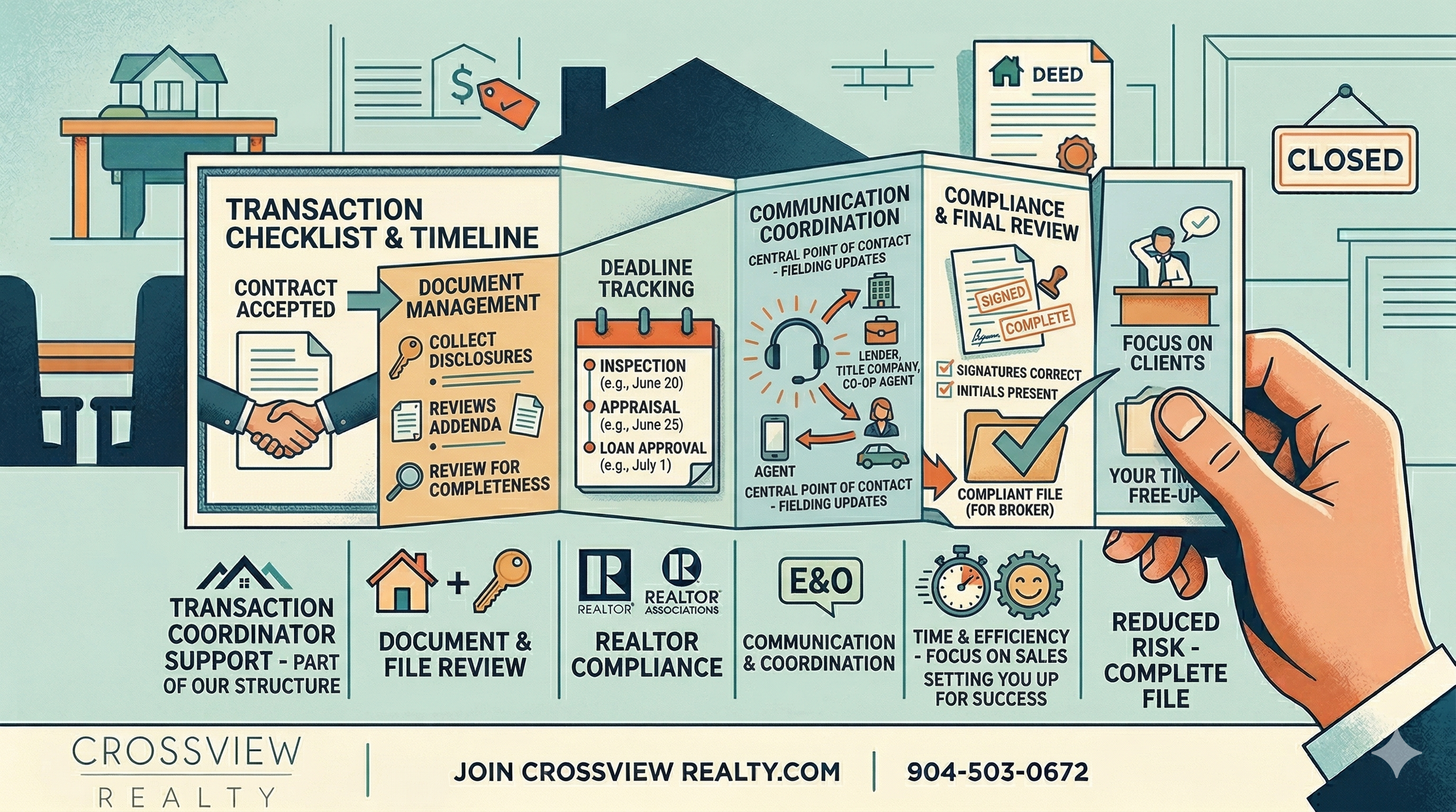
What does a real estate transaction coordinator actually do — and do you need one?
A transaction coordinator manages the administrative work that happens between a signed contract and closing day. Documents, deadlines, compliance, communication — all the behind-the-scenes details that keep a deal on track while you stay focused on the next client.
That's the textbook answer. Here's the more useful one: what a TC actually does depends heavily on who they are, who they work for, and how the agent or brokerage they support has structured the role. And that distinction matters more than most agents realize when they're evaluating whether — and who — to use.
What a Transaction Coordinator Traditionally Handles
In a typical setup, a TC steps in once a purchase agreement is executed and stays involved through closing. Their core responsibilities generally include:
Document management. Reviewing contracts for completeness, collecting required disclosures, organizing addenda and amendments, and making sure the right documents get to the right people — title company, lender, co-op agent — at the right time.
Deadline tracking. Every transaction runs on a calendar of critical dates: inspection periods, appraisal contingencies, loan approval windows, title commitment deadlines, and the closing date itself. A TC monitors all of it and keeps everyone on schedule.
Communication coordination. They serve as a central point of contact, fielding updates from lenders, title companies, and inspectors so the agent doesn't have to chase every thread.
Compliance and file review. Making sure signatures are in the right places, initials aren't missing, required forms are included, and the file will hold up to brokerage compliance review at closing.
Closing coordination. Scheduling final walkthroughs, confirming closing details, and ensuring all parties have what they need for a smooth close.
That's a meaningful amount of work — especially when you're juggling multiple active deals. For agents in Jacksonville, St. Augustine, and across Northeast Florida where transaction volume can move quickly in certain markets, having someone managing that detail load is a real advantage. We covered how back-office systems factor into your overall brokerage evaluation in our post on how to evaluate a brokerage's back office.
Here's What the Descriptions Online Won't Tell You
Most articles about transaction coordinators describe the role as if it's standardized. It isn't.
There are independent TCs — professionals who work across multiple agents at different brokerages. They typically have a consistent process they follow from contract to close, and they charge per transaction. The scope of what they handle is usually well-defined, though it still varies person to person. Some of them take over nearly everything administrative once you're under contract. Others handle a narrower slice of the process.
Then there are TCs employed directly by a brokerage — hired to support only the agents at that office. These roles are often shaped by how the brokerage model is structured, what tools they use, what compliance requirements they have, and what the broker expects agents to handle themselves. A brokerage TC might do things a freelance TC typically doesn't — and skip things a freelance TC would normally cover. The job description gets written around the operation, not the other way around.
The point isn't that one model is better. The point is that you can't assume what a TC does based on what you read in a general description. The responsibilities can vary significantly — sometimes dramatically — from one TC to the next.
The Questions You Should Actually Be Asking
Whether you're considering hiring a freelance TC, evaluating a brokerage that offers TC support, or trying to figure out whether a TC is even the right move for your business right now, the conversation should start with specifics.
Ask exactly what they handle — and what they don't. Where does their role begin and where does it end? Who communicates with the client, and who communicates with the lender? What happens if a deal hits a problem mid-transaction — who's responsible for navigating it? What software or systems do they use, and does that integrate with how you work?
The answers will tell you far more than any job description. And if those questions feel familiar, they're the same kind of questions we recommend asking during any brokerage interview — as we covered in our broker interview checklist.
How CrossView Realty Approaches This
At CrossView Realty, transaction support is part of how we're structured — not an afterthought. We're happy to walk any agent through exactly what that looks like, what we handle, and what stays with you. If you want to understand the full picture before making a decision about where to hang your license in Jacksonville or across Northeast Florida, reach out at joincrossviewrealty.com or call 904-503-0672.
A transaction coordinator can absolutely free you up to do more of the work that actually grows your business. But the value you get depends entirely on finding the right fit — and that starts with asking the right questions instead of assuming the role looks the same everywhere.
Frequently Asked Questions
Q: What does a real estate transaction coordinator do? A TC manages the administrative side of a real estate transaction from contract to close — handling documents, tracking deadlines, coordinating communication between parties, and ensuring compliance. But the specific scope of their responsibilities varies significantly depending on whether they're an independent TC or employed by a brokerage, and how that role has been defined.
Q: Do I need a transaction coordinator as a new real estate agent? Not necessarily from day one — but understanding what a TC does and what support your brokerage provides is an important question to ask before you choose where to hang your license. Having that administrative backbone in place becomes increasingly valuable as your deal volume grows.
Q: What's the difference between a freelance TC and a brokerage TC? An independent TC works across multiple agents at different brokerages and typically charges per transaction. A brokerage TC is employed by a specific office and serves only that brokerage's agents. Their responsibilities are shaped by the brokerage's systems and model, which means what they do can look quite different from what you'd expect based on a general description.
Q: How much does a transaction coordinator cost in Florida? Freelance TCs in Florida typically charge per transaction — rates vary but commonly fall in the range of a few hundred dollars per file depending on the complexity and scope of services. Brokerage-employed TCs are usually covered as part of the brokerage's model rather than billed separately to the agent.
Q: Can a transaction coordinator talk to my clients? In most cases, yes — TCs commonly communicate with clients about document requests, scheduling, and status updates. However, they typically cannot advise clients on contract terms or negotiate on their behalf, as those activities require a real estate license. Clarify this scope with any TC before you start working together.