How to Win a Listing Appointment (By Not Trying to Win It)
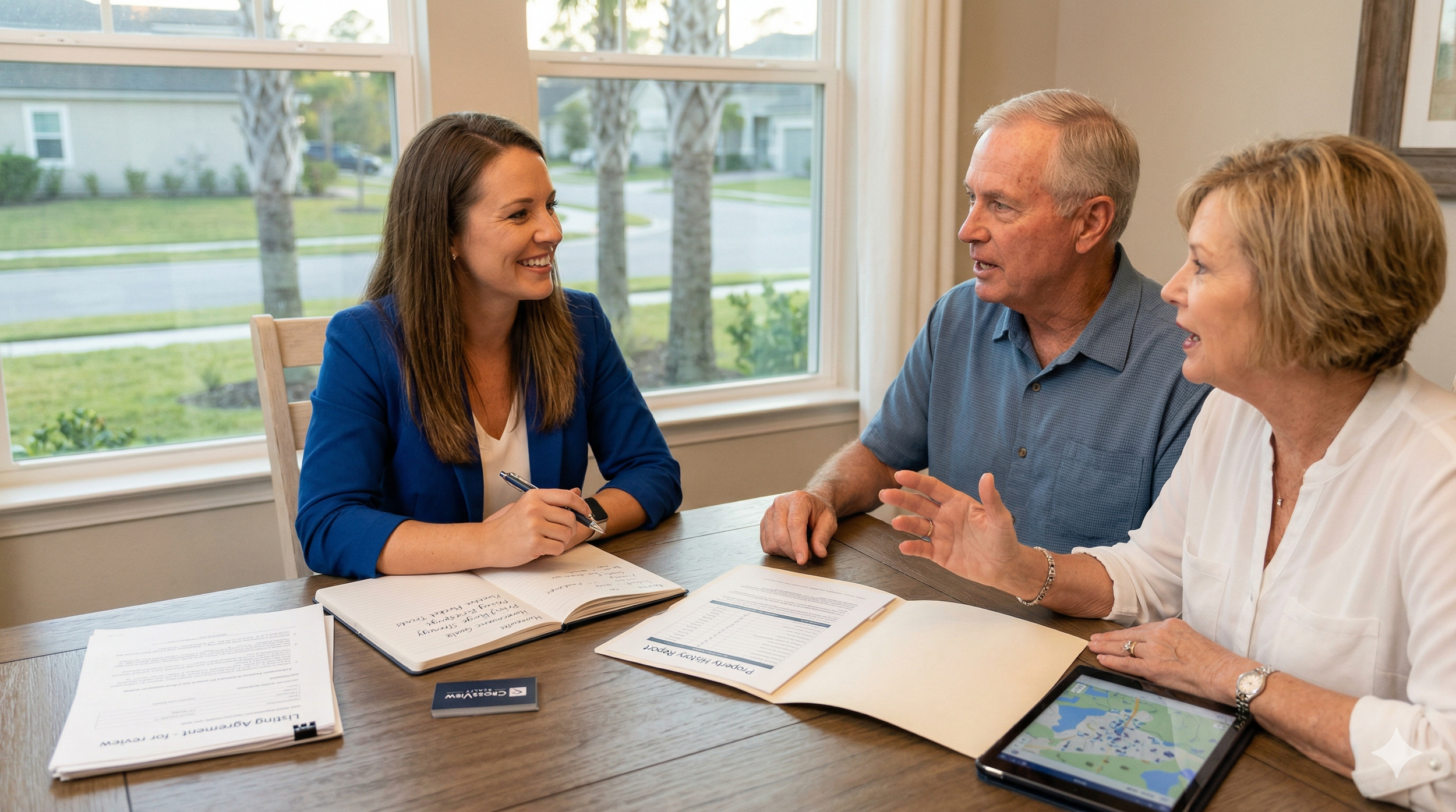
How do you walk into a listing appointment and walk out with the listing?
You're probably expecting a script, a close, a stack of paperwork, and a strategy for getting the signature before you leave. That's what most advice on this topic sounds like.
Here's a different perspective — one that works better, feels more natural, and builds the kind of trust that actually leads to signed agreements.
Don't go in trying to win the listing. Go in trying to help the seller.
Do Your Homework Before You Ever Walk In
The work starts before you arrive. Pull up everything you can on the property — price history, days on market for comparable homes in the area, condition patterns in the neighborhood. If there's a previous listing on the home, find it. Look at the old photos. Get a feel for the layout, what's been updated, what might need attention.
Then, before you pull into the driveway, drive the neighborhood. Seriously — get there early and tour the surrounding streets. Look at competing listings. Note their curb appeal, their condition, what they're priced at. By the time you ring the doorbell, you should already know that street better than most people who live on it.
Walk in with a price range, not a price. This matters more than most agents realize. You don't know what you're walking into until you're inside. Does it smell like pets or cigarettes? Is the home next door unmaintained? Did the seller describe updates that turn out to be cosmetic at best? All of that changes your number. A range protects you from overcommitting before you have the full picture — and it gives you room to have an honest conversation.
Be a Human First, an Agent Second
When you walk through the home, pay attention to more than the square footage. Notice what's on the walls. A photo from a city you've visited, a trophy from a sport you played, a piece of art that catches your eye. Those moments of genuine connection — "Is that from St. Augustine? I love that area" — do more for trust than any rehearsed pitch.
Some agents walk in and immediately start complimenting everything in sight. And yes, that works with some sellers. But for plenty of people, over-the-top enthusiasm reads as performative. Read the room. Be warm, be observant, be real.
When you sit down — and a table is always better than a couch if you have the option — resist the urge to launch into your presentation. Start with questions. What are they trying to accomplish? What's their timeline? What do they know about the current market? What have they already heard from other agents?
That last one is especially useful. Ask what they know about the commission rule changes that took effect in August 2024. Then listen. Most sellers have heard something — but what they've heard is often incomplete or inaccurate. By asking what they already know, you can correct misconceptions naturally and fill in the gaps without making them feel lectured.
Give More Information Than They Expected
Here's something that comes up over and over in listing appointments: sellers say "you've given us more information than all the other agents we've talked to combined."
That's not an accident. It's the result of coming in prepared, asking good questions, and actually answering what they're asking — not deflecting to your marketing materials or rushing toward the paperwork.
Talk through different pricing strategies and what each one accomplishes. Walk them through what a marketing plan actually looks like, in language they can understand. Explain showings, feedback, market updates, and what consistent communication from their agent should look like. If you need a framework for what that communication rhythm should be, we covered it in depth in our post on what to expect from your first real estate listing.
Be the agent who treats the appointment like a consultation, not a sales call.
Don't Ask for the Signature at the Appointment
This is where a lot of conventional advice will tell you the opposite — and it's worth pushing back on.
Bring paperwork for them to review. Absolutely. Let them see the listing agreement, understand what they're looking at, ask questions. But don't pressure anyone to sign on the spot.
Here's why: a seller who signs because they felt pressured isn't a confident seller. And an unconfident seller is one who second-guesses decisions, creates friction during negotiations, and in some cases, isn't actually ready to sell. The listing you don't win because you didn't push for the signature on day one is sometimes the listing that would have cost you more than it was worth.
Let them sit with it. Follow up promptly. Send a brief summary of what you discussed — your proposed price range, your marketing approach, the next steps if they move forward. That follow-through alone sets you apart from most agents they'll meet.
How CrossView Realty Approaches This
At CrossView Realty, we train agents to think about listing appointments the way we think about recruiting — with information, honesty, and genuine interest in what the other person actually needs. We're not trying to pressure anyone into a decision. We're trying to build the kind of relationship where the decision is obvious. If that approach resonates with how you want to operate, we'd love to talk. Reach out at joincrossviewrealty.com or call904-503-0672.
Sometimes the listing appointments you don't win are blessings. The sellers who weren't quite ready, the properties that were priced in a way you couldn't support, the situations that would have cost you more energy than they returned. Trust the process. Do your homework, show up early, listen more than you talk, give generously, and follow up.
The agents who win listings consistently aren't the best closers in the room. They're the most prepared — and the most helpful.
Frequently Asked Questions
Q: How do you win a real estate listing appointment? Stop treating it like a close and start treating it like a consultation. The agents who consistently win listings come in deeply prepared, ask more questions than they answer, and give sellers more useful information than they expected. Pressure sells — but trust closes.
Q: Should I bring a listing agreement to a listing appointment? Yes — bring one for them to review. But don't pressure anyone to sign it at the appointment. A seller who signs because they felt rushed isn't a confident seller. Give them the information, follow up promptly, and let the decision be theirs to make clearly.
Q: How do I prepare for a real estate listing appointment in Jacksonville or Northeast Florida? Pull the property's history, study comparable listings in the area, and drive the neighborhood before you arrive. Know which homes are currently for sale nearby, what they look like from the street, and how your property compares. Walk in with a price range — not a fixed number — until you've seen the home in person.
Q: How should I handle the August 2024 commission rule changes with sellers? Ask them what they already know before you explain anything. Most sellers have heard something, but it's often incomplete or inaccurate. Starting with their understanding lets you correct misconceptions naturally and fill in gaps without it feeling like a lecture.
Q: What's the most common mistake agents make at listing appointments? Talking too much. The agents who lose listings often spend the appointment pitching themselves instead of listening to the seller. Ask what they're trying to accomplish, what their timeline looks like, and what concerns they have. Then answer those — not the presentation you prepared.